
Homemade Deep Dish Pizza Pie with Sourdough Crust
This post may contain affiliate links. Please read my disclosure policy to learn more.
This Homemade Deep Dish Pizza Pie with Sourdough Crust is comfort food at its finest: a golden, buttery sourdough crust filled with layers of gooey cheese, hearty meat sauce, and all your favorite toppings baked right into a flaky, deep-dish pie that tastes like it came from your favorite pizza place.

Recipe Overview: Homemade Deep Dish Pizza Pie with Sourdough Crust
- ⏱ Prep Time: 1 hour 25 minutes
- 👩🏻🍳 Baking Time: 35 minutes
- ⏳ Total Time: 2 hours
- 🍞 Serving: 6
- ⚡ Calories: 268 calories per serving
- 🍂 Flavor Profile: Thick, tender sourdough crust with a slight tang, holding a rich, cheesy, and savory deep-dish pizza filling.
- 👌 Difficulty: Medium — requires sourdough fermentation, shaping, and layering ingredients for a deep-dish style.
SUMMARIZE & SAVE THIS RECIPE ON
Jump to:
This deep dish pizza pie is one of those recipes that looks fancy but feels familiar. It’s made with my sourdough pie crust, baked in a glass pie plate, and layered the way deep dish is meant to be: crust, cheese, meat sauce, veggies, more cheese. The result is a buttery, flaky base that holds its shape, a bubbling layer of sauce that doesn’t sog out the bottom, and that glorious cheesy top you have to resist cutting into too soon.
This crust started as a pie dough, the kind I’d use for apple pie or chicken pot pie. It’s buttery like a traditional pie crust but has that signature sourdough tang that deepens in the oven. You can use active starter if you want a bit of rise, or sourdough discard if you just want the flavor and a tender crumb. It works beautifully both ways.
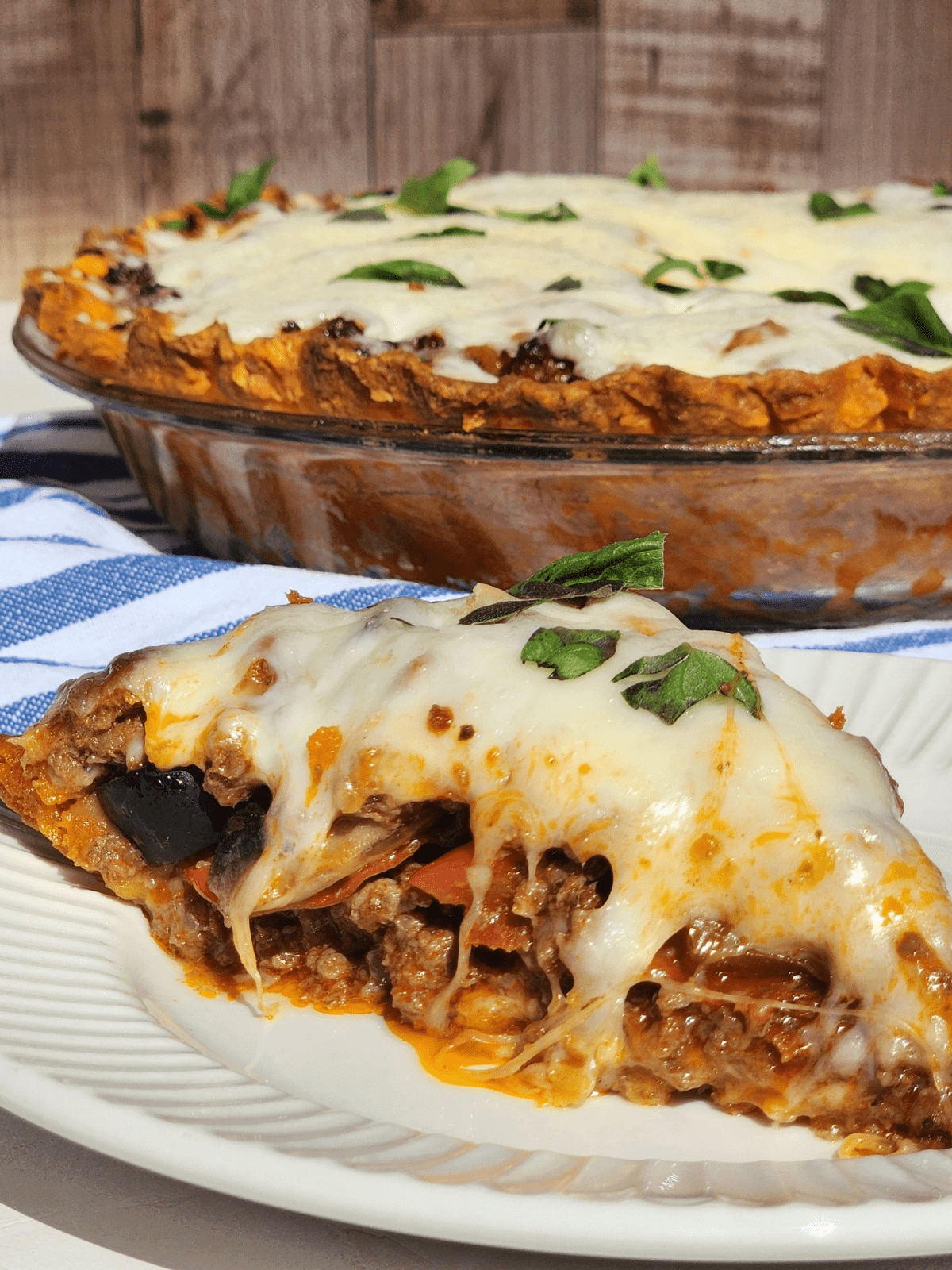
Homemade Deep Dish Pizza Pie with Sourdough Crust
Ingredients (makes 2 crusts)
Sourdough Crust
- 1 cup active sourdough starter or discard
- 2½ cups all-purpose flour
- 1 cup cold unsalted butter, cubed or grated
- 2 teaspoons salt
- 1 tablespoon sugar
for the Meat Sauce
- 1 tablespoon olive oil
- 1 pound ground beef or Italian sausage
- 1 ½ cup pizza sauce
For the Toppings
- 2–3 cups shredded mozzarella cheese (divided)
- ½ cup grated parmesan cheese
- ½ cup sliced pepperoni
- ½ cup sliced mushrooms
- ½ cup diced bell peppers
- ¼ cup sliced black olives
- Olive oil, for brushing the crust

Instructions
1. Make the Sourdough Crust
- In a large bowl, whisk together the flour, sugar, and salt.
- Cut in the cold butter with a pastry cutter or your fingertips until the mixture resembles coarse crumbs.
- Add the sourdough starter and toss gently with a fork until the dough begins to hold together.
- Bring it into a ball on a lightly floured surface, folding with a bench scraper until it just comes together.
- Flatten into a disc, wrap tightly in plastic wrap, and chill for at least 1 hour (up to 3 days).
- When ready to bake, let rest 5–10 minutes at room temperature. Roll into a 12-inch circle to fit your 9-inch glass pie plate, leaving a small overhang. Press the dough gently into the bottom and up the sides. Prick the base a few times with a fork.
2. Make the Meat Sauce
- Heat olive oil in a skillet over medium heat.
- Add ground beef (or sausage) and cook until browned, breaking it up with a spoon.
- Stir in pizza sauce, simmer uncovered for 5 minutes.
3. Assemble the Pizza Pie
- Brush your crust lightly with olive oil.
- Layer 1 – Cheese barrier: Sprinkle about 1 cup mozzarella over the bottom of the crust.
- Layer 2 – Meat sauce: Spoon the sauce evenly over the cheese.
- Layer 3 – Toppings: Add pepperoni, mushrooms, bell peppers, onions, and olives.
- Layer 4 – More cheese: Top generously with the remaining mozzarella and a sprinkle of parmesan.
4. Bake
- Preheat the oven to 425°F (220°C). I like to place it on the top rack and put an empty baking sheet on the lower one to catch any drips.
- Bake for 35–40 minutes, until the cheese is bubbling and the crust edges are golden brown.
- If the top browns too quickly, tent with foil during the last 10 minutes.
What to Serve With It:
- A fresh green salad — something crisp and simple, like romaine or arugula with olive oil, lemon juice, and parmesan. It cuts the richness beautifully.
- Garlic bread or breadsticks — if you’re going all in on carbs (no judgment here).
- Roasted vegetables — roasted broccoli, zucchini, or asparagus pair well with the cheesy, saucy flavors.
Change It Up:
- Make it Supreme: Add crumbled sausage, green peppers, onions, and olives for that pizzeria classic.
- Go Meat-Lovers: Layer pepperoni, Italian sausage, ham, and bacon bits between two cheese layers for something hearty.
- Veggie Delight: Skip the meat sauce and load it with roasted peppers, onions, mushrooms, zucchini, and spinach.
- White Pizza Version: Swap the tomato sauce for a thin layer of ricotta or Alfredo and top with spinach, artichokes, and mozzarella.
- Breakfast Pizza Pie: Use scrambled eggs, cooked bacon, and cheese in the crust for a brunch twist (yes, it works!).
- Mini Versions: Make individual pies using small tart pans or ramekins — perfect for kids or entertaining.

Tips for Best Results
- Use very cold butter. The colder the butter, the flakier your crust. If it starts to soften while mixing, pop the dough back into the fridge for a few minutes before rolling it out.
- Don’t overwork the dough. Once it starts to come together, stop kneading — overmixing can make the crust tough instead of tender.
- Brush the crust with olive oil. It adds flavor and helps it bake to a golden, glossy finish that looks bakery-perfect.
- Layer cheese before sauce. This simple trick is the secret to a crisp crust every time — it seals the bottom from moisture and creates that gooey “under layer” that deep dish is known for.
- Let it rest after baking. Give it at least 10–15 minutes to cool before slicing. The layers will set, and you’ll get those perfect, picture-worthy wedges.
- Use good quality pizza sauce. If your sauce tastes great from the jar or can, your pizza will too. If it’s thin, simmer for 5 minutes to thicken before layering.
- Don’t skip the salt in the crust. It balances the butter and the sourdough tang — without it, your crust can taste flat.
- Think high heat. Deep dish loves a hot oven. 425°F is the sweet spot for a golden crust and bubbly top without burning.

FAQ'S:
Can I use sourdough discard instead of active starter?
Yes, you can make this deep dish pizza with sourdough crust with either one. Active starter gives a lighter, slightly puffy texture, while sourdough discard creates a rich, buttery, and flavorful crust. Both bake beautifully golden brown in a home oven.
Does the dough need to rise like traditional sourdough pizza dough?
No. This sourdough pie crust doesn’t rely on bulk fermentation the way a high-hydration dough does. The butter and starter create lift and flakiness without long rise times, so you can chill, roll, and bake the same day.
Can I bake this on a baking steel or stone?
Yes, placing your pie plate or cast iron skillet on a preheated baking steel helps create a crispy crust and evenly baked bottom. It’s one of the best ways to mimic a pizza place heat source in a home oven.
How thick should the crust be?
About ¼ inch thick on the bottom and slightly thicker around the sides of the pan. This gives a sturdy, tall crust that holds the sauce and cheese without feeling heavy.
Do I need to use bread flour for the crust?
All-purpose flour gives the most tender, flaky results. Bread flour creates more chew and structure, which is great for a traditional sourdough pizza dough, but this recipe leans more toward buttery pie texture than chewy bread.
Can I mix the dough in a stand mixer?
Yes. Use a dough hook on low speed until the mixture starts to clump together. You don’t need to knead it, just bring it together until it forms a rough dough ball. A large mixing bowl and a bench scraper work just as well by hand.
Should I let the dough rest before rolling it out?
Always. Chilling the dough for at least an hour relaxes the gluten and makes it easier to roll without tearing. It also helps the butter stay cold, which gives that signature flaky sourdough crust when it bakes.
How do I keep the dough from sticking to my work surface?
Dust lightly with flour and use a bench scraper to lift and turn the dough as you roll. If your kitchen is warm, chill the dough for a few minutes halfway through to keep the butter from melting.
Can I make this deep dish pizza ahead of time?
Yes. Assemble this deep dish pizza with sourdough crust, cover it with plastic wrap, and refrigerate for up to 24 hours before baking. The cold rest deepens the flavor of the sourdough crust and makes pizza night stress-free.
What’s the best cheese for deep dish pizza?
Low-moisture mozzarella melts evenly and forms that gooey layer under the sauce. For an authentic touch, use Wisconsin brick cheese or add a sprinkle of parmesan over the top before baking.
Why do you put the cheese under the sauce?
That’s the deep dish secret. Adding cheese before the pizza sauce keeps the sourdough crust from getting soggy and helps the edges bake up crisp and cheesy.
Can I use store-bought pizza sauce?
Yes. About 1½ to 2 cups of good-quality pizza sauce is perfect. If your sauce is watery, simmer it for a few minutes to thicken before layering it into your sourdough deep dish pizza.
What oven temperature works best?
Bake at 425°F for about 35–40 minutes. The high heat helps the butter in the crust steam, creating layers and a flaky texture while the cheese melts into the sauce.
How do I know when it’s done baking?
When the edges of the sourdough crust are golden brown, the top is bubbling, and the sides of the pan look caramelized with melted cheese, it’s ready.
Can I use parchment paper under the crust?
You can, especially if you’re using a metal pan. It helps with easy removal and cleanup, but make sure to oil the sides of the pan so the edges brown properly.
Can I freeze the unbaked pizza?
Yes. Assemble it completely, cover tightly with plastic wrap and foil, and freeze for up to two months. Bake straight from frozen, adding about ten minutes to the total bake time.
Can I make a smaller or individual version?
Yes, divide the dough into equal pieces and use mini pie plates or small cast iron skillets. They bake faster, usually around 25–30 minutes.
What’s the difference between this and a Chicago-style pizza?
They’re very similar in layering and structure, but this sourdough version has a flakier crust and deeper flavor. Chicago-style crusts are usually yeast-based, while this one uses a rich sourdough starter for that homemade tang.
Why does my crust shrink or pull away from the pan?
That can happen if the dough wasn’t chilled long enough or was stretched too tightly when pressed into the pan. Letting it rest after rolling and pressing it gently instead of pulling keeps it in place as it bakes.
Can I use this dough for other sourdough pizza recipes?
Yes, it’s incredibly versatile. It works for Detroit-style pizza, Sicilian-style pizza, or even a savory galette. You can also roll it thinner for a more traditional sourdough pan pizza with crispy edges.
What’s the best way to store leftovers?
Keep leftovers in an airtight container or wrapped in foil in the refrigerator for up to three days. Reheat in the oven or air fryer until the cheese melts and the crust is crisp again.
Other recipes you'll like:
Flaky Sourdough Pie Crust Recipe (Sweet or Savory)
The Best Thin Crust Sourdough Pizza Dough Recipe
How to Make Your Own Sourdough Starter for Bread-Making
pin for later


Homemade Deep Dish Pizza Pie with Sourdough Crust
Equipment
- 1 large bowl
- 1 Whisk
- 1 9 in glass pie dish
- 1 Skillet
Ingredients
For the Sourdough Crust
- 1 cup active sourdough starter or discard
- 2½ cups all-purpose flour
- 1 cup cold unsalted butter cubed or grated
- 2 teaspoons salt
- 1 tablespoon sugar
For the Meat Sauce
- 1 tablespoon olive oil
- 1 pound ground beef or Italian sausage
- 1 ½ cup pizza sauce
For the Toppings
- 2 –3 cups shredded mozzarella cheese divided
- ½ cup grated parmesan cheese
- ½ cup sliced pepperoni
- ½ cup sliced mushrooms
- ½ cup diced bell peppers
- ¼ cup sliced black olives
- Olive oil for brushing the crust
Instructions
Make the Sourdough Crust
- In a large bowl, whisk together the flour, sugar, and salt.
- Cut in the cold butter with a pastry cutter or your fingertips until the mixture resembles coarse crumbs.
- Add the sourdough starter and toss gently with a fork until the dough begins to hold together.
- Bring it into a ball on a lightly floured surface, folding with a bench scraper until it just comes together.
- Flatten into a disc, wrap tightly in plastic wrap, and chill for at least 1 hour (up to 3 days).
- When ready to bake, let rest 5–10 minutes at room temperature. Roll into a 12-inch circle to fit your 9 in glass pie dish, leaving a small overhang. Press the dough gently into the bottom and up the sides. Prick the base a few times with a fork.
Make the Meat Sauce
- Heat olive oil in a skillet over medium heat.
- Add ground beef (or sausage) and cook until browned, breaking it up with a spoon.
- Stir in pizza sauce, simmer uncovered for 5 minutes.
Assemble the Pizza Pie
- Brush your crust lightly with olive oil.
- Layer 1 – Cheese barrier: Sprinkle about 1 cup mozzarella over the bottom of the crust.
- Layer 2 – Meat sauce: Spoon the sauce evenly over the cheese.
- Layer 3 – Toppings: Add pepperoni, mushrooms, bell peppers, onions, and olives.
- Layer 4 – More cheese: Top generously with the remaining mozzarella and a sprinkle of parmesan.
Bake
- Preheat the oven to 425°F (220°C). I like to place it on the top rack and put an empty baking sheet on the lower one to catch any drips.
- Bake for 35–40 minutes, until the cheese is bubbling and the crust edges are golden brown.
- If the top browns too quickly, tent with foil during the last 10 minutes.
Notes
Tips for Best Results
- Use very cold butter. The colder the butter, the flakier your crust. If it starts to soften while mixing, pop the dough back into the fridge for a few minutes before rolling it out.
- Don’t overwork the dough. Once it starts to come together, stop kneading — overmixing can make the crust tough instead of tender.
- Brush the crust with olive oil. It adds flavor and helps it bake to a golden, glossy finish that looks bakery-perfect.
- Layer cheese before sauce. This simple trick is the secret to a crisp crust every time — it seals the bottom from moisture and creates that gooey “under layer” that deep dish is known for.
- Let it rest after baking. Give it at least 10–15 minutes to cool before slicing. The layers will set, and you’ll get those perfect, picture-worthy wedges.
- Use good quality pizza sauce. If your sauce tastes great from the jar or can, your pizza will too. If it’s thin, simmer for 5 minutes to thicken before layering.
- Don’t skip the salt in the crust. It balances the butter and the sourdough tang — without it, your crust can taste flat.
- Think high heat. Deep dish loves a hot oven. 425°F is the sweet spot for a golden crust and bubbly top without burning.


yum! Thank you for this recipe! I appreciate how clearly you explained every step, and the ingredients were budget-friendly and pantry-staple friendly.