
Soft and Fluffy Sourdough Dinner Rolls Recipe
This post may contain affiliate links. Please read my disclosure policy to learn more.
If you’ve been searching for the best sourdough dinner roll recipe that’s soft, fluffy, and versatile enough for everything from weeknight soups to a Thanksgiving turkey or prime rib Christmas meal, you’ll come to the right place.
Recipe Overview: Soft and Fluffy Sourdough Dinner Rolls Recipe
- ⏱ Prep Time: 25 minutes
- 🚨 Ferment Time: 8 hours
- 👩🏻🍳 Baking Time: 15 minutes
- ⏳ Total Time: 8 hours 40 minutes
- 🍞 Serving: 24 rolls
- ⚡ Calories: 81 calories per roll
- 🍂 Flavor Profile: Tender, airy, and slightly tangy rolls with a soft crumb and golden crust, perfect alongside any meal.
- 👌 Difficulty: Medium — requires sourdough fermentation and shaping for consistent, fluffy rolls.
SUMMARIZE & SAVE THIS RECIPE ON
Jump to:
- Recipe Overview: Soft and Fluffy Sourdough Dinner Rolls Recipe
- Why You’ll Love These Sourdough Rolls
- Ingredients
- Instructions:
- Baker’s Schedule Example
- Tips for the Best Sourdough Dinner Rolls
- How to Take Your Sourdough Dinner Rolls to the Next Level:
- FAQs:
- pin for later
- Soft and Fluffy Sourdough Dinner Rolls Recipe
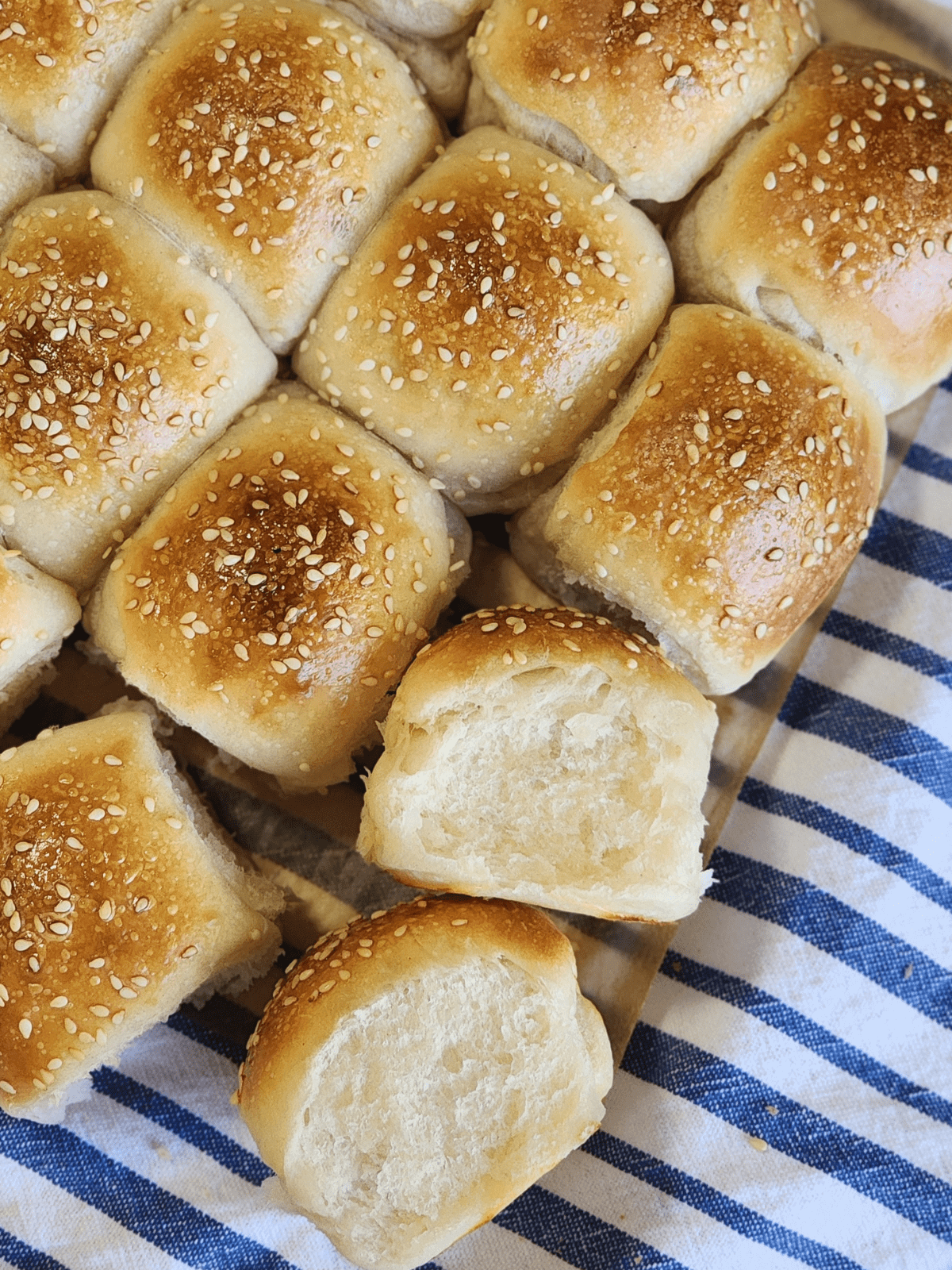
I developed this sourdough dinner roll recipe as a half-batch of my sourdough hamburger buns. I didn’t need quite that much dough, so I halved the recipe and shaped smaller rolls, each around 40 grams. The result was twenty-four of the softest, fluffiest sourdough rolls I’ve ever made. They pull apart perfectly, have a light tang from wild yeast, and bake up with a gorgeous golden crust that shines from a light egg wash.
Whether you’re just beginning your sourdough journey or have been nurturing a bubbly sourdough starter for years, this small-batch version is simple, dependable, and perfectly sized for both everyday family dinners and special occasions. They’re the kind of rolls that fit right in beside a roasted turkey on your Thanksgiving table or a tender prime rib Christmas meal. If you’re feeling fancy, try tucking a ball of mozzarella inside before baking for a yummy cheesy twist.

Why You’ll Love These Sourdough Rolls
- Soft, fluffy, and rich Melted butter, whole milk, and honey make these rolls taste like bakery bread with a tender crumb.
- Sourdough flavor, no yeast packets required All the rise comes from your own sourdough starter, using natural wild yeast.
- Small batch – Makes 24 dinner rolls (about 40 g each) just enough for a family meal or small holiday dinner.
- Perfect texture – Golden crust on the outside, soft and airy inside; ideal for butter, jam, or soaking up gravy.
- Flexible timing – Mix in the morning and bake that evening, or refrigerate overnight for a next day bake.
- Everyday or holiday-ready – Beautiful enough for Thanksgiving, simple enough for weeknight soups and stews.
- Better-for-you ingredients – Fermented sourdough breaks down phytic acid and lowers the glycemic index for easier digestion.

Ingredients
(Makes 24 soft sourdough dinner rolls)
- 1 cup (240 g) active sourdough starter (fed and bubbly)
- ½ cup (120 ml) warm milk (room temperature)
- 1 cup (240 ml) filtered water
- 2 tablespoons (28 g) melted butter
- 2 tablespoons (30 g) honey
- 1 teaspoon salt
- 4 cups (480 g) all purpose flour
- For the egg wash: 1 egg + 1 teaspoon water, whisked together
Instructions:
Step 1:
The night before baking, feed your sourdough starter so it’s bubbly and active by morning. You’ll need about 1 cup of active sourdough starter for this recipe.

Step 2:
In the bowl of a stand mixer fitted with a dough hook attachment, combine:
- Active starter
- Warm milk
- Water
- Melted butter
- Honey
- Salt
- 3 ½ cups of the flour
Mix on low speed until a rough dough forms and the sides of the bowl start to come clean. Increase to medium speed and mix for 3–4 minutes until you have a smooth dough. The dough should feel slightly tacky but not sticky.
If it still clings to the bowl, add the remaining ½ cup of flour, one tablespoon at a time.
Step 3:
Keep the mixer running on medium speed for another 4–5 minutes until the dough feels elastic. You can perform a quick windowpane test, stretch a small piece of dough gently between your fingers. If it stretches thin without tearing, gluten has developed properly.
Step 4:
Lightly oil or butter a mixing bowl, place the dough inside, and cover with plastic wrap or a tea towel. Let it rise in a warm place (around 75°F/24°C) for 6–8 hours, or until doubled in size.
This is your first proof, also called bulk fermentation. Depending on your starter’s strength and kitchen temperature, the dough rise time can vary. A slower, cooler rise always gives more of that sourdough flavor.
Step 5:
Once the dough has completed bulk fermentation, transfer it to a lightly greased work surface. Use a bench scraper to divide it into 24 equal pieces, each weighing about 40 grams.
To shape:
- Take one piece of dough, tuck the edges underneath, and roll it in a circular motion against the counter with your palm to create surface tension.
- The top of the dough should look smooth and tight.
- Arrange the shaped rolls in a greased baking dish or on a parchment paper–lined small sheet pan, spaced closely for pull-apart rolls, or farther apart for individual rolls.


Step 6:
Cover the rolls lightly with plastic wrap or a tea towel. Let them rise in a warm place until puffed, about 2–4 hours.
When ready, the rolls should look pillowy and bounce back slowly when gently pressed on the top of the rolls.

Step 7:
Preheat your oven to 425°F (218°C).
In a small bowl, whisk together one egg with a teaspoon of water. Using a pastry brush, gently coat the tops of the rolls with the egg wash. This step helps create that glossy, golden brown crust.
Step 8:
Place the rolls in the preheated oven and bake for 12–15 minutes, rotating halfway through, until the tops are golden brown and the internal temperature reaches about 190°F (88°C).
Step 9:
Remove from the oven and let the rolls rest for at least 10 minutes before pulling them apart. Serve warm with butter, cranberry sauce, or your favorite holiday spread.

Baker’s Schedule Example
Step |
Time |
|
Feed starter |
9 PM (night before) |
|
Mix dough |
7 AM |
|
First rise (bulk fermentation) |
7 AM - 2 PM |
|
Shape rolls |
2 PM |
|
Second rise |
2 PM – 5 PM |
|
Bake |
5 PM |
|
Dinner time |
5:30 PM |
If you prefer to bake the next day, refrigerate the dough after the first rise (covered) and shape it the next morning. Chilled dough is easier to work with and develops even deeper flavor.

Tips for the Best Sourdough Dinner Rolls
- For best results, use a bubbly sourdough starter that’s at its peak, not flat or deflated.
- Use bread flour for a stronger gluten network and lighter texture, but purpose flour (all-purpose) still makes a tender roll.
- If you want to experiment, swap in ½ cup of whole wheat flour for flavor and color.
- Don’t rush the dough rise, watch the dough, not the clock. Every kitchen’s temperature and starter strength are different.
- A touch of olive oil in the bowl keeps the dough from sticking during bulk fermentation.
- To make the rolls even more tender, brush them with melted butter right after baking.
- Store leftovers in an airtight container at room temperature for up to 3 days, or freeze for up to 2 months.

How to Take Your Sourdough Dinner Rolls to the Next Level:
These soft sourdough dinner rolls are incredible as-is, but they’re also the perfect base for creative twists. Once you’ve mastered the classic version, try one (or a few!) of these delicious upgrades:
Garlic Butter Sourdough Rolls
Melt 3 tablespoons of butter and stir in 2–3 minced garlic cloves, a pinch of salt, and a sprinkle of parsley. Brush this mixture over the top of the rolls right after they come out of the oven. The warmth helps the garlic butter soak in, creating that irresistible, savory flavor.
Cheesy Pull-Apart Sourdough Rolls
Before shaping, flatten each piece of dough slightly and tuck in a small cube of mozzarella or cheddar. Pinch to seal and shape as usual. When baked, they turn into gooey, pull-apart sourdough dinner rolls, perfect with prime rib or soup night.
Herbed Olive Oil Rolls
Instead of brushing with melted butter, whisk together 3 tablespoons of olive oil, ½ teaspoon of dried rosemary or Italian seasoning, and a pinch of sea salt. Brush it over the shaped rolls before baking for a fragrant, crisp-topped variation.
Honey Butter Glazed Rolls
For a lightly sweet version, mix 2 tablespoons of melted butter with 1 tablespoon of honey and brush over the rolls as soon as they come out of the oven. The honey caramelizes just slightly, giving you shiny, golden brown rolls that melt in your mouth.
FAQs:
Yes. After shaping, cover the pan tightly and refrigerate overnight. The next day, let them come to room temperature for about an hour before baking. This slow rise actually improves flavor.
You can add about ½ teaspoon of active dry yeast if your starter is slow or your kitchen is cold. This shortens the rise time to roughly 2–3 hours, but the rolls will have a slightly different sourdough character.
All-purpose flour works just fine. The rolls may be a bit softer and less chewy, but they’ll still turn out fluffy and delicious.
The dough should roughly double in size, look slightly domed, and feel airy. When gently pressed, it should slowly spring back halfway.
They should be deep golden on top and register about 190°F internally. Tapping the tops should give a slightly hollow sound.
Make sure the dough is well-kneaded until smooth and don’t rush the rise time. Proper gluten development and full fermentation are key to a light, airy texture.
Wrap in foil and warm in a 300°F oven for about 10 minutes. Brushing with a little butter after reheating makes them taste freshly baked.
Yes. Once fully cooled, freeze in an airtight bag. Thaw at room temperature and warm before serving for best texture.
Check that your starter is active and bubbly before using it. If your kitchen is cold, move the dough to a warmer spot, like inside an oven with the light on.
pin for later


Soft and Fluffy Sourdough Dinner Rolls Recipe
Equipment
- 1 Stand mixer
- 1 Mixing bowl
- 1 Baking dish
- 1 Parchment paper
- 1 Small bowl
Ingredients
- 1 cup active sourdough starter (fed and bubbly)
- ½ cup warm milk (room temperature)
- 1 cup filtered water
- 2 tablespoons melted butter
- 2 tablespoons honey
- 1 teaspoon salt
- 4 cups all purpose flour
- For the egg wash: 1 egg + 1 teaspoon water whisked together
Instructions
Step 1
- The night before baking, feed your sourdough starter so it’s bubbly and active by morning. You’ll need about 1 cup of active sourdough starter for this recipe.
Step 2
- Step 2: In the bowl of a stand mixer fitted with a dough hook attachment, combine: Active starter, Warm milk, Water, Melted butter, Honey, Salt, 3 ½ cups of the flour
- Mix on low speed until a rough dough forms and the sides of the bowl start to come clean. Increase to medium speed and mix for 3–4 minutes until you have a smooth dough. The dough should feel slightly tacky but not sticky.
- If it still clings to the bowl, add the remaining ½ cup of flour, one tablespoon at a time.
Step 3
- Keep the mixer running on medium speed for another 4–5 minutes until the dough feels elastic. You can perform a quick windowpane test, stretch a small piece of dough gently between your fingers. If it stretches thin without tearing, gluten has developed properly.
Step 4
- Lightly oil or butter a mixing bowl, place the dough inside, and cover with plastic wrap or a tea towel. Let it rise in a warm place (around 75°F/24°C) for 6–8 hours, or until doubled in size.
- This is your first proof, also called bulk fermentation. Depending on your starter’s strength and kitchen temperature, the dough rise time can vary. A slower, cooler rise always gives more of that sourdough flavor.
Step 5
- Once the dough has completed bulk fermentation, transfer it to a lightly greased work surface. Use a bench scraper to divide it into 24 equal pieces, each weighing about 40 grams.
- To shape:
- Take one piece of dough, tuck the edges underneath, and roll it in a circular motion against the counter with your palm to create surface tension.
- The top of the dough should look smooth and tight.
- Arrange the shaped rolls in a greased baking dish or on a parchment paper–lined small sheet pan, spaced closely for pull-apart rolls, or farther apart for individual rolls.
Step 6
- Cover the rolls lightly with plastic wrap or a tea towel. Let them rise in a warm place until puffed, about 2–4 hours.
- When ready, the rolls should look pillowy and bounce back slowly when gently pressed on the top of the rolls.
Step 7
- Preheat your oven to 425°F (218°C).
- In a small bowl, whisk together one egg with a teaspoon of water. Using a pastry brush, gently coat the tops of the rolls with the egg wash. This step helps create that glossy, golden brown crust.
Step 8
- Place the rolls in the preheated oven and bake for 12–15 minutes, rotating halfway through, until the tops are golden brown and the internal temperature reaches about 190°F (88°C).
Notes
Tips for the Best Sourdough Dinner Rolls
- For best results, use a bubbly sourdough starter that’s at its peak, not flat or deflated.
- Use bread flour for a stronger gluten network and lighter texture, but purpose flour (all-purpose) still makes a tender roll.
- If you want to experiment, swap in ½ cup of whole wheat flour for flavor and color.
- Don’t rush the dough rise, watch the dough, not the clock. Every kitchen’s temperature and starter strength are different.
- A touch of olive oil in the bowl keeps the dough from sticking during bulk fermentation.
- To make the rolls even more tender, brush them with melted butter right after baking.
- Store leftovers in an airtight container at room temperature for up to 3 days, or freeze for up to 2 months.


so soft and delicious! Will make again and again. thank you!
Soft and yummy! Thanks for the recipe.